Learn how plastic ceiling pipe ventilating fans work, key components, typical applications, and how to select the right model for steady indoor ventilation.
Introduction
Plastic ceiling pipe ventilating fans are widely used as spot-ventilation devices in building projects where air needs to be exhausted through a ceiling opening and ducted to another point. In residential and light commercial projects, they are commonly specified to help remove humid air, odors, and stale air from enclosed rooms and service areas.
Below we explain where these fans are typically used, why the ducted ceiling format is selected, and how to match airflow and opening size to real project needs.
Main Product Features
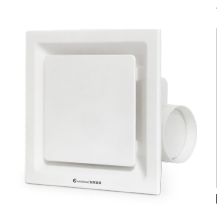
- Ceiling + duct (pipe) ventilation format: designed to fit into a ceiling cut-out and connect to ventilation ducting.
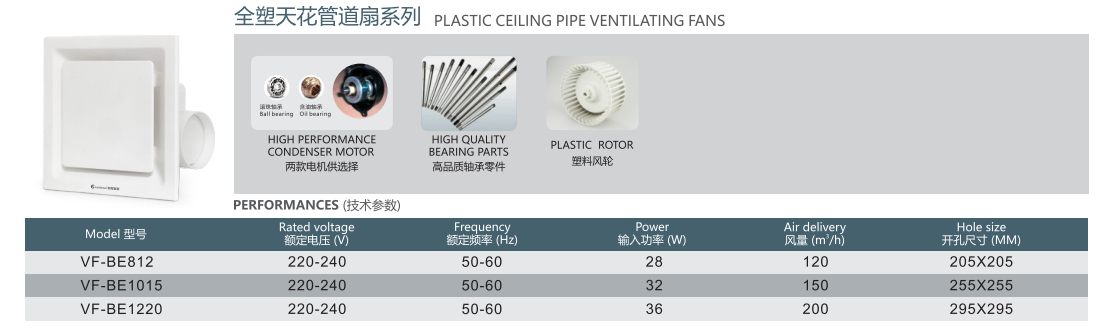
- Component highlights: high performance condenser motor options, high quality bearing parts, and a plastic rotor (as shown in the product materials).
- Multiple airflow options by model: suitable for different room sizes and exhaust targets.
Technical or Practical Advantages
- Project-friendly ceiling integration: helps keep the fan body concealed while supporting ducted exhaust routing.
- Model-based matching: installers can select airflow and opening size based on the room function and ceiling plan.
- Practical for repeated room types: especially useful for multi-unit projects where bathrooms, toilets, and utility rooms have similar layouts.
Where Are Plastic Ceiling Pipe Ventilating Fans Commonly Used?
Residential Projects
- Bathrooms and shower rooms: to help remove humid air and reduce lingering odors after use.
- Toilets / powder rooms: for quick odor exhaust where natural ventilation is limited.
- Laundry areas: for moisture-related ventilation needs, especially in enclosed utility corners.
- Small enclosed storage or service rooms: where air can become stagnant and a ducted exhaust point is preferred.
Light Commercial Projects
- Small offices: toilets, pantry areas, copy/utility rooms, or other enclosed support spaces that benefit from ducted exhaust.
- Retail back-of-house: staff restrooms and storage rooms with limited outdoor openings.
- Clinics and service facilities (light-duty areas): restrooms and non-medical utility rooms where a ceiling duct route is part of the building design.
- Small hospitality: guest restrooms and housekeeping rooms, especially in projects with repeated ceiling modules.
For general ventilation design and installation considerations for restroom exhaust, you may also reference authoritative guidance such as Building America’s bathroom exhaust fan resource and ASHRAE’s residential ventilation guidance: Building America Solution Center – Bathroom Exhaust Fans and ASHRAE – Guidance for Covid Mitigation in Residential Buildings (Ventilation).
Specifications or Key Parameters
The VF-BE series includes multiple models. Based on the provided product materials, key parameters are as follows:
| Model |
Rated Voltage (V) |
Frequency (Hz) |
Power (W) |
Air Delivery (m³/h) |
Hole Size (mm) |
| VF-BE812 |
220-240 |
50-60 |
28 |
120 |
205×205 |
| VF-BE1015 |
220-240 |
50-60 |
32 |
150 |
255×255 |
| VF-BE1220 |
220-240 |
50-60 |
36 |
200 |
295×295 |
Selection or Buying Guidance
- Start from the room function: bathrooms/toilets typically prioritize fast odor and moisture removal, while utility rooms may focus on steady air exchange.
- Match airflow to the exhaust task: select a higher air delivery model when the room is larger, usage is more frequent, or faster exhaust is required.
- Confirm the ceiling opening plan: choose the model that matches the available cut-out (hole size) to avoid rework on site.
- Plan duct routing early: ceiling duct paths should be coordinated with other services (lighting, sprinklers, HVAC ducts) for smoother installation.
For buyers managing multiple projects or repeated room types, you can also review similar application scenarios in our success cases and browse more ventilation-related options in our product catalog.
Conclusion
Plastic ceiling pipe ventilating fans are commonly used in residential bathrooms, toilets, and utility spaces, as well as light commercial support rooms such as staff restrooms and back-of-house areas. By selecting the correct airflow level and matching the ceiling opening size, project teams can standardize ventilation performance across multiple rooms and buildings.
Contact Us
Kocurnsiy is a trading company specializing in the export of HVAC, ventilation, and lighting products, including exhaust fans, LED downlights, ceiling lights, and street lights. Our products are designed for durability, safety, and energy efficiency.
- Contact person: Marketing Manager Ricardo
- Email: info@kocurnsiy.com
- WhatsApp: +86 13217609138
