Hello, fellow lighting professionals, architects, and B2B procurement specialists. Ricardo here. If you have spent any time sourcing commercial illumination, you know that the ceiling is an unforgiving environment. Once a luminaire is installed into a drywall ceiling or a grid, the expectation is that it performs flawlessly for years. Nobody wants to dispatch a maintenance crew with scaffolding to replace failing fixtures six months after a project handover.
This brings us to a cornerstone of modern commercial architecture: the IP54 Recess Mounted LED Downlight. As buyers, we often look at spec sheets filled with numbers—7W to 28W, 3000K to 6500K, 50,000 hours. But to truly understand why a premium downlight commands its position in the market, we need to look under the hood. Today, I am walking you through the exact production processes, material sciences, and electrical engineering principles that make our SX-DL series the standard for global B2B lighting projects.
Let’s start with the undisputed enemy of any light-emitting diode: heat. When an LED chip converts electrical energy into photons, it inevitably generates thermal energy. If this heat is trapped within the recessed ceiling void, it slowly cooks the phosphor coating on the diode. The result? Color shifting (where a crisp 4000K white turns into a sickly, dim blue) and a severely shortened lifespan.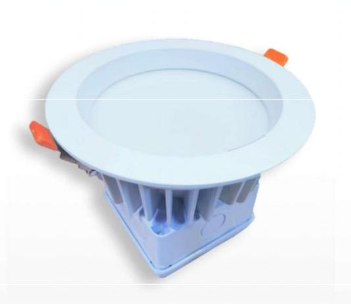
This is precisely why we engineer our Recess Mounted LED Downlights using premium Die-Casting Aluminum rather than stamped sheet metal or thermal plastics. Die-casting involves injecting molten aluminum into a highly precise mold under extreme pressure. This process creates a dense, unified metal structure with intricate, deep cooling fins on the rear of the housing. These fins maximize the surface area exposed to the ambient air inside the ceiling cavity. Aluminum has an exceptionally high thermal conductivity rate, acting as a massive heat sink that actively pulls heat away from the sensitive SMD LED board and the internal driver. By mastering thermal management engineering, we guarantee that the diodes operate well within their safe temperature margins, securing that promised 50,000-hour service life.
When you are specifying lighting for a high-end hotel bathroom, a semi-outdoor commercial canopy, or a bustling restaurant kitchen, standard IP20 fixtures simply won't survive. Dust accumulation destroys optical clarity, and moisture causes catastrophic electrical shorts. This is where IP54 Ingress Protection becomes a mandatory specification.
What does IP54 actually mean on the production line? The "5" indicates that the fixture is highly protected against dust ingress—enough that any microscopic dust that does enter will not interfere with the electrical operation. The "4" guarantees protection against splashing water from any direction. We achieve this strict rating through advanced sealing technologies. During assembly, precision-extruded silicone gaskets are seated tightly between the die-cast aluminum bezel, the optical lens, and the rear housing. Unlike cheap rubber that degrades and cracks over time, our high-grade industrial silicone retains its elasticity despite years of thermal cycling. This ensures the optical chamber remains hermetically isolated from the humid, dusty environment outside.
The core illumination engine of our SX-DL series utilizes SMD (Surface-Mounted Device) LED architecture. If you are comparing technologies, you might wonder why we choose SMD arrays over a single COB (Chip on Board) for this specific series. The answer lies in light distribution and thermal load balancing.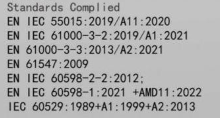
An SMD architecture spreads multiple individual LED diodes across a wide, flat printed circuit board (PCB). Because the thermal load is distributed across a larger physical footprint, the die-cast aluminum heat sink can dissipate the heat much more efficiently than it could from a single, intensely hot COB focal point. Furthermore, this wide array of diodes provides an inherently broader base of luminous flux. Whether it is the 7W model generating 688 lumens or the heavy-duty 28W model pushing out 2,752 lumens, the SMD working principle ensures consistent, glare-free light generation that is perfectly suited for general ambient illumination in commercial spaces.
Generating light is only half the battle; controlling it is what separates a professional luminaire from a basic bulb. In commercial environments like retail stores or corporate lobbies, spatial illumination needs to be uniform. To achieve this, our engineering team utilizes high-transmittance optical diffusers to shape the output into a precise 90° Beam Angle.
A 90° beam angle is the "sweet spot" for ambient recess lighting. It is wide enough to provide excellent floor coverage—reducing the total number of fixtures you need to buy for a project—but focused enough to avoid uncomfortable glare in the eyes of occupants. Coupled with this optical control is our commitment to color fidelity. The series boasts a CRI (Color Rendering Index) of ≥80. This means that under our lighting, product packaging in a store, food in a cafeteria, and skin tones in an office look natural and vibrant, not washed out. We meticulously select our SMD phosphors during the manufacturing process to ensure this color accuracy across the entire 3000K to 6500K CCT spectrum.
The most common point of failure in commercial LED lighting isn't the LED chip itself; it is the driver. Power grids in commercial zones are notoriously unstable, plagued by voltage spikes and sags caused by heavy machinery or HVAC systems turning on and off. To combat this, the SX-DL series is engineered with a robust, high-efficiency constant current driver designed to handle a wide input range of 220-264V AC.
The working principle of our constant current driver is to actively monitor the incoming fluctuating voltage and convert it into a perfectly stable, unwavering output current (ranging from 200mA for the 7W up to 700mA for the 28W models). This electrical stability completely eliminates the stroboscopic effect (invisible flickering) that causes eye strain and headaches in office workers. By isolating the sensitive SMD chips from the violent fluctuations of the commercial power grid, we ensure flicker-free illumination and drastically extend the hardware's lifespan.
When an architect specifies a Service Life of 50,000 hours, they need hardware that can survive in less-than-ideal conditions. Commercial ceilings are often un-air-conditioned spaces. In the summer, the plenum space bakes; in the winter, near doorways, it freezes.
Our IP54 Recessed LED Downlights are engineered with an exceptionally wide ambient temperature tolerance of -20°C to +45°C. We achieve this through rigorous material selection. The electrolytic capacitors inside our drivers are specifically chosen for high thermal endurance. The potting compounds used to secure electrical components resist shrinking and cracking in sub-zero temperatures. Because every component—from the die-cast aluminum body to the internal wiring—is stress-tested against these environmental extremes, the 50,000-hour rating isn't a theoretical laboratory number; it is a real-world guarantee.
For my friends in B2B procurement and global distribution, compliance paperwork is just as important as the physical product. If a container of lighting fixtures gets stopped at customs because it lacks CE/RoHS certification, it creates a supply chain nightmare. At Kocurnsiy, we engineer our products backward from the strictest global compliance standards.
The production of the SX-DL series is strictly governed by a suite of international EN and IEC standards. We comply with EN IEC 55015 for radio disturbance characteristics (ensuring our lights don't interfere with hospital equipment or office Wi-Fi), EN 61547 for electromagnetic immunity, and the rigorous EN IEC 60598-1 / 60598-2-2 standards specific to the electrical safety and thermal testing of recessed luminaires. Furthermore, our IP54 rating is validated under IEC 60529. When you source from us, you are buying a product that has legally verified engineering safety baked into every unit.
Installation speed is a critical metric for commercial electrical contractors. We have structurally engineered the SX-DL series to provide a frictionless installation experience while maintaining a watertight seal against the ceiling substrate.
We designed the series around three standardized cut-out dimensions (Hole Sizes): 145mm, 170mm, and 205mm. The die-cast aluminum bezel extends precisely beyond these cut-out limits (e.g., a 145mm hole utilizes a 170mm outer bezel) to provide ample coverage for minor drywall cutting errors. More importantly, the fixtures employ heavy-duty, high-tension spring clips. These springs exert continuous upward pressure, pulling the silicone-gasketed bezel tightly against the ceiling material. This structural engineering eliminates gaps, ensuring the IP54 integrity of the room is maintained and that the fixture will not sag over time.
A true commercial lighting series must offer scalability to handle varying ceiling heights and illuminance requirements across a single building project. You don't want to use a different brand for the low-ceiling corridors than you do for the double-height atrium.
We engineered the SX-DL series to scale flawlessly. Using identical high-efficiency SMD platforms, we meticulously calibrate the driver output current to match the thermal capacity of the upgraded die-cast heat sinks.
| Model Reference | System Power (W) | Output Current (mA) | Luminous Flux (lm) | Cut-out Hole Size (mm) |
|---|---|---|---|---|
| SX-DL-D100 | 7W | 200 mA | 688 lm | 145 mm |
| SX-DL-D130 | 15W | 350 mA | 1474 lm | 145 mm |
| SX-DL-D180 | 18W | 450 mA | 1769 lm | 170 mm |
| SX-DL-D270 | 28W | 700 mA | 2752 lm | 205 mm |
This power-to-lumen scalability ensures that whether you need 688 lumens for intimate accent lighting or a massive 2,752 lumens for a towering retail space, the color temperature, beam angle, and architectural aesthetic remain 100% unified across your entire project.
Ultimately, specifying the right hardware is about mitigating risk. By choosing IP54 Recess Mounted LED Downlights built with die-casting aluminum housings, strict EN/IEC compliance, and advanced thermal management, you are protecting your project's reputation. The SX-DL series isn't just a lighting fixture; it is a carefully calibrated optical and thermal instrument designed to deliver 50,000 hours of flawless, maintenance-free performance. When quality is non-negotiable, engineering matters.
Q1: What makes Die-Casting Aluminum better than stamped steel for LED downlights?
Die-casting aluminum allows for the creation of intricate, high-density cooling fins that act as a massive heat sink. This provides exponentially better thermal conductivity than flat stamped steel, rapidly pulling heat away from the LED chips to ensure the 50,000-hour service life.
Q2: Can the IP54 rating withstand direct water jets?
No. IP54 indicates high protection against dust ingress and protection against splashing water from any direction. It is perfect for bathrooms, under-eaves, and kitchens, but for areas exposed to direct, high-pressure water jets, an IP65 rating would be required.
Q3: Are these downlights suitable for extremely cold environments like walk-in commercial freezers?
Yes, the SX-DL series features an operating ambient temperature tolerance from -20°C to +45°C. The sealed IP54 design and stable constant-current driver perform exceptionally well in sub-zero commercial applications.
Q4: Do I need to buy different drivers for different global regions?
The integrated constant current drivers in this series are engineered to accept a wide input voltage range of 220-264V. This makes them highly adaptable and stable across various international power grids that utilize 220V, 230V, or 240V standards.
Are you outfitting a new commercial development or looking to distribute premium LED downlights in your region? Let's talk technical specs and volume pricing.
